The link between recurrent UTIs and menopause
Women who are in perimenopause or menopause have an increased risk of developing a chronic UTI problem. As if the hot flushes, insomnia and unwanted weight gain weren’t enough!
So, why does this happen in menopause particularly?
The decline in estrogen levels during menopause is usually proposed as the main cause. Let’s look at it closer to see if that’s the whole truth.
And then, we’ll discuss alternative natural treatments for recurrent UTIs in menopause that support your body without compromising your health.
Estrogen helps to keep your bladder healthy
Promotes healthy bacteria in the vagina
First of all, estrogen supports vaginal health by promoting the growth of healthy lactobacillus bacteria in the vagina. This helps to prevent harmful bacteria from growing in the area.
In menopause, estrogen levels start to naturally decline. This can cause the beneficial bacteria to be replaced by more harmful intestinal bacteria, as estrogen isn’t helping to keep the healthy bacteria thriving anymore.
And as the harmful bacteria start to take over around the vaginal area, it’s a short journey for the infection-causing bacteria to travel to the bladder creating an opportunity for a UTI to happen, over and over again.
Supports the bladder lining
Another role estrogen serves in our bodies is that it keeps the bladder and vaginal tissues healthy and moist.
In a healthy pre-menopausal woman, the cells in the bladder lining naturally produce antimicrobial peptides (the body’s antibiotic) that act as a defense against infection from bacteria.
In some menopausal women, the bladder lining is more fragile and damaged with gaps between the cells. This makes it more challenging to fight against infection.
A study in Sweden discovered that estrogen treatment helped to strengthen the bladder lining, creating a stronger defense against bacteria. This could explain why many women find relief for their recurrent UTIs after taking estrogen.
Now that we know the role of estrogen in recurrent UTIs from the scientific medical point of view, let’s expand our perspective.
If estrogen is to blame, why don’t all menopausal women have UTIs?
When it comes to our bodies, it’s never that simple! It’s good to remember that we are not robots or victims of our hormones.
If this were the case, then every single woman would have recurrent UTIs in menopause when estrogen starts to naturally decline. And we know this isn’t the case.
Some women never have UTIs or even any significant menopausal symptoms. So, there must be other contributing factors.
An alternative view on menopausal symptoms
Trying to understand the root cause of hormonal problems very quickly becomes a chicken or egg situation and we go around in circles looking for the answer.
Women are cyclical by nature. We follow a monthly cycle dictated by hormones, and our mood, food preferences, and needs change even weekly depending on the fluctuations.
The beauty of our bodies is that all systems work closely together in a fine-tuned balance to keep us healthy and thriving. However, this delicate balance can be disrupted easily, causing unwanted symptoms.
As the endocrine system (your hormones) is closely linked to other organs and systems, there is often more than one reason or imbalance in the body that is causing your menopausal symptoms.
Illness tends to be the result of accumulated triggers, exposure to toxins and pathogens, lifestyle factors, and habits that build up over the years, creating more and more disharmony in the body and mind.
Contributing factors to (peri)menopause
- Overworked or struggling adrenals that cannot cope with hormone production.
- Your adrenals produce small quantities of sex hormones (estrogen, progesterone and testosterone) throughout your life. In menopause, when the ovaries eventually stop producing hormones, your body will now rely on the adrenals for the production of these hormones.
- This is why your adrenal health has a significant effect on how well you will cope in menopause and after. If you have well-functioning adrenals, then you will probably have an easier time. And if your adrenals are overworked, then it can bring some challenges during menopause.
- A sluggish liver that cannot effectively clear excess hormones and toxins anymore.
- Toxic overload from viruses and bacteria, pesticides, chemicals, pharmaceutical medicines, unhealthy diets etc.
- Chronic stress, poor stress management. This contributes to elevated stress hormones which impact the liver and adrenals.
- Your immune system is dealing with the hormonal changes and this can lower your defenses to infections like UTIs.
- Any unprocessed trauma or old emotions that haven’t been dealt with. Menopause can be a significant emotional trigger for many women and you may react to it on the physical level as well.
5 steps to help your body heal recurrent UTIs
The healthier and stronger your body is, the better it can detect and fight any infections, including UTIs. Even when estrogen levels start to decline.
Looking after your body (and mind) in a holistic manner will give you the best results. Supporting the adrenals, the liver and the immune system will help you manage menopause better.
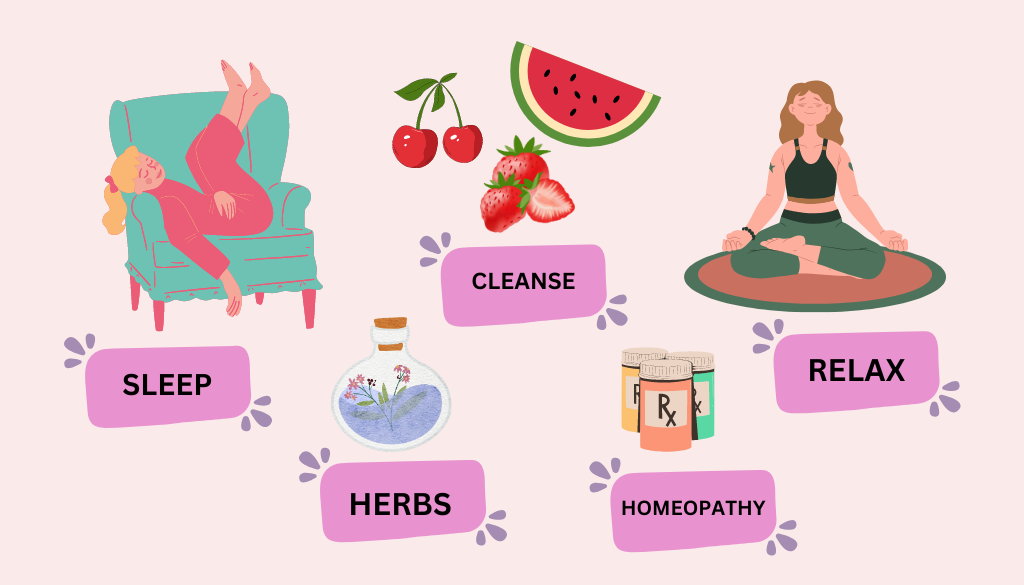
5 steps to boost your immune system:
Step 1 – Review your diet
- The food you eat has an enormous impact on your physical and mental health. Are you addicted to certain foods, treats, chocolate or junk food? Are you drinking a lot of coffee? Do you skip meals? Do you eat plenty of fruit and veggies? Do you drink enough water? Do you eat enough? Do you overeat? Are you an emotional eater?
- Many of us have a complicated relationship with food so please don’t judge yourself, be gentle and understanding but also radically honest with yourself about your eating habits.
- For lunch and dinner, have vegetables and greens for 50% of the plate. Lower your fat intake (oils, butter, cheese, nuts, avocado, fatty meats) and avoid fats until lunch if possible as this helps your liver heal and detox.
Step 2 – Prioritise sleep
- During deep sleep, your body does a lot of repairing and cleansing. Sleep and rest are essential for your wellbeing so can you find more time for resting in your day?
Step 3 – Good stress management
- One of the best ways to relieve stress and tension is to laugh and feel genuine joy and enjoyment. Finding and choosing activities that bring you joy helps to balance out any stress you’ve experienced during the day. Also, deep breathing and gentle movement like yoga or walking are helpful.
Step 4 – Herbal tinctures
- Helpful herbal medicines to support your immune system and bladder include goldenseal, uva ursi, cat’s claw and echinacea. These are best used temporarily for a few months at a time, taken daily. For liquid tinctures, look for ones without alcohol if possible (as alcohol puts a strain on the liver).
Step 5 – Vitamins
- Taking vitamin C and zinc daily supports your immune system, helping to prevent infections in the long run.
Treating your UTI at home with homeopathic remedies
If taking cranberry tablets or other tricks aren’t working for you (they never did for me!), you can try homeopathic remedies to manage any acute UTI episodes.
When you find the right remedy for you, it can work very quickly!
When I had recurrent UTIs, the remedy took my pain away in less than 10 minutes, whereas ibuprofen or other painkillers would take at least an hour. I was very impressed by how my body responded so beautifully to homeopathy.
To learn which remedy to take for your UTI, check out my article on top UTI remedies.
Conclusion
Recurrent UTIs during the menopausal period are usually explained by the natural decline in estrogen. But this may not be the full truth as not all women get UTIs during menopause, so there must be more to the story.
Overburdened liver and struggling adrenals as well as an overload of toxins and pathogens are often the underlying cause.
You can improve your health and reduce menopausal symptoms and UTIs by making small, consistent changes in your diet, habits and lifestyle choices.
And of course, using homeopathic remedies to manage acute UTI episodes. The remedies are easy to use, and effective but gentle for your body. And without unwanted side effects!
So, what about you – what steps are you taking or want to take to support your wellbeing further?