Chronic UTI – why tests aren’t reliable
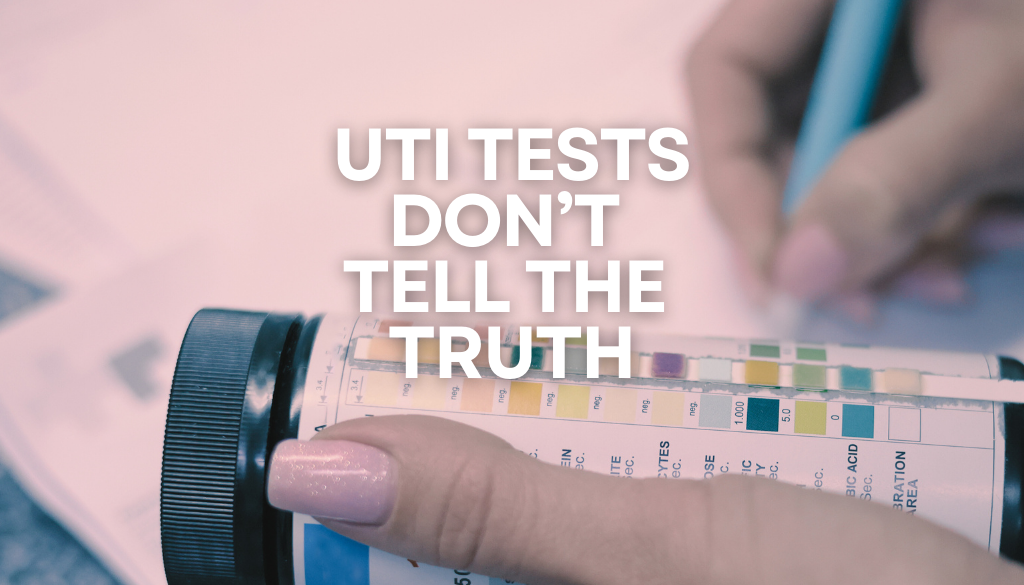
When you visit a doctor to get tested for a potential UTI, you might receive a negative result despite actually having an infection that is not picked up by the tests.
This makes it harder to get diagnosed with chronic UTI especially, as doctors can be reluctant to pursue investigations if the dipstick or the urine culture test is coming back negative.
So, don’t rely on the tests alone to get confirmation of the infection. It’s important to listen to yourself, track symptoms and trust that you know if something is wrong in your body.
The two tests that are used regularly to check for UTI
DIPSTICK TEST
A paper strip with different chemicals on it is dipped into urine. The chemicals will react to substances in your urine indicating a potential infection.
Leucocytes (white blood cells) – Often a sign of infection or inflammation in the urinary system.
Red blood cells – Indicates a bleed in the bladder, usually due to inflammation and irritation caused by an infection and constant urination.
Protein – Having protein in the urine can indicate a kidney infection as usually only very small amounts filter through the kidneys.
Nitrites – Some UTI-causing bacteria, like E.coli, make an enzyme that changes waste urinary nitrates to nitrites, so it can be a sign of infection.
MID-STREAM URINE CULTURE TEST
A sample of urine will be placed on a petri dish and left to incubate for 18 -24 hours. Bacteria will multiply quickly in laboratory conditions so this test can reveal the presence of different pathogens in the urine.
The problem with the dipstick test

- False negatives are common so many chronic infections are missed.
- The dipstick test only looks for gram-negative bacteria such as E.coli but ignores other pathogens that can also cause UTIs.
- Biofilm or embedded infection in the bladder lining isn’t picked up by this test.
- Drinking a lot of water before the test can dilute the urine and not produce accurate results.
- Recent antibiotics can also produce inaccurate results.
The problem with the urine culture test

The mid-stream urine culture (MSU) is considered the gold standard of urine testing. However, in more chronic UTI cases it is not reliable at all as up to 90% of chronic infections are missed.
- This test isn’t very sensitive and doesn’t pick up many pathogens that can cause infection.
- It doesn’t detect dormant bacteria hiding in the bladder lining (very common in chronic UTI).
- The bladder is not sterile. Even healthy people have bacteria in their urine, which can confuse tests.
“It is worrying that the gold standard diagnostic test cannot discriminate patients from controls.”*
You don’t need test results to treat UTI with homeopathy
The beauty of homeopathy is that your diagnosis, or the lack of it, does not stop you from getting treatment.
The homeopathic treatment is based on your symptoms and as long as you have some, then you can treat the infection. This makes homeopathy an excellent choice in situations where you may experience mystery symptoms or you haven’t received any official diagnosis but you know something is not right.
Also, homeopathy is a gentle and non-toxic form of medicine, making it ideal for someone who is sensitive to pharmaceutical medicine or wishes to avoid excessive antibiotics for example.
If you want to try homeopathy for yourself, I’ve written an article on top recommended remedies for an acute UTI. That’s a good place to start.
And if you have any questions, feel free to contact me.


